
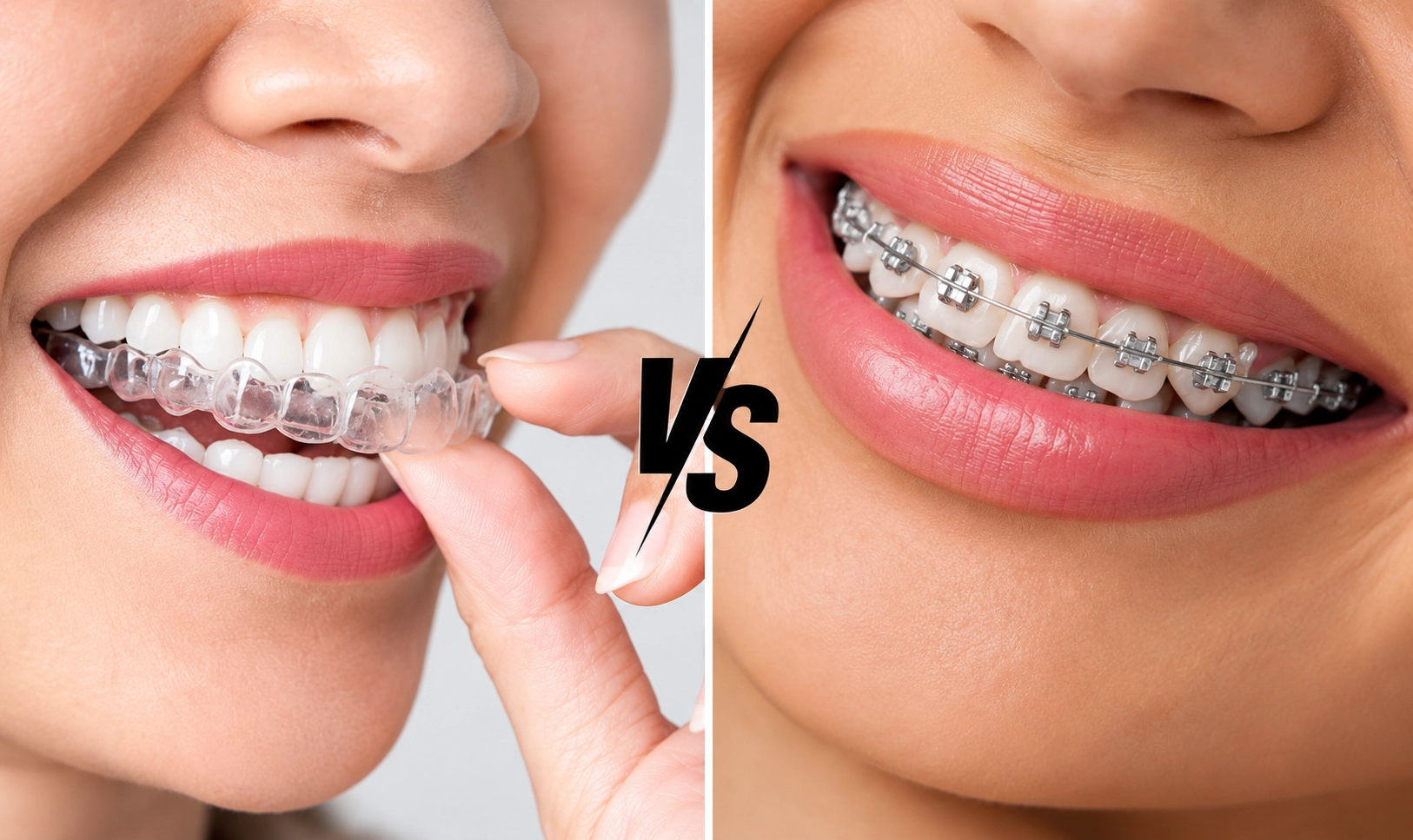

Straightening your teeth can improve both the appearance of your smile and your overall oral health. Today, patients have more options than ever when it comes to orthodontic treatment, with Invisalign and traditional braces being two of the most popular choices.
While both treatments are designed to correct issues such as crowded teeth, gaps, and bite problems, they work in different ways and offer different experiences. Understanding the differences between Invisalign and braces can help you decide which option may be the right fit for your lifestyle, dental needs, and treatment goals.
What Is Invisalign?
Invisalign is an orthodontic treatment that uses a series of clear, removable aligners to gradually move your teeth into the desired position.
The aligners are custom-made using digital scans or impressions of your teeth. Each set is worn for a specific period before moving on to the next set, gently guiding your teeth through controlled movements.
Because Invisalign aligners are nearly invisible, many patients choose this option when they want a more discreet alternative to traditional braces.
What Are Traditional Braces?
Traditional braces use metal or ceramic brackets attached to the teeth and connected with wires. The orthodontist adjusts the wires over time to apply continuous pressure and gradually move the teeth.
Braces have been used for decades and remain an effective treatment option for many orthodontic concerns, including more complex alignment and bite issues.
While modern braces are smaller and more comfortable than older versions, they are still a visible orthodontic treatment.
Invisalign vs. Braces: Key Differences
Although both Invisalign and braces can create a straighter smile, there are several differences to consider.
| Feature | Invisalign | Traditional Braces |
|---|---|---|
| Appearance | Clear and discreet | More noticeable |
| Removable | Yes | No |
| Food restrictions | Fewer restrictions | Some foods should be avoided |
| Cleaning | Easier to brush and floss | Requires more care around brackets |
| Treatment control | Requires patient compliance | Fixed system controlled by orthodontist |
| Complex cases | Suitable for many cases | Often preferred for complex movements |
Comfort and Daily Lifestyle
One of the biggest differences between Invisalign and braces is how they fit into your daily routine.
Invisalign Comfort
Since Invisalign aligners are made from smooth plastic, many patients find them comfortable to wear. There are no metal brackets or wires that may irritate the cheeks or gums.
However, patients may experience mild pressure or tightness when switching to a new aligner. This is usually a sign that the aligners are working and the teeth are moving as planned.
Braces Comfort
Braces apply consistent pressure to move teeth and may cause some discomfort after adjustments. The brackets and wires can also take some time to get used to.
Orthodontic wax and proper care can help reduce irritation during the adjustment period.
Which Treatment Works Faster?
The treatment time for Invisalign and braces varies depending on the complexity of your case.
Some mild alignment issues may be corrected in a shorter period, while more complicated cases may require longer treatment.
Factors that influence treatment duration include:
- The amount of tooth movement needed
- The severity of crowding or spacing
- Bite correction requirements
- Patient cooperation
- The treatment plan created by your dental professional
Your dentist or orthodontist can provide a more accurate estimate after evaluating your smile.
Is Invisalign Better Than Braces?
There is no single option that is better for every patient. The right choice depends on your specific dental needs, lifestyle preferences, and treatment goals.
Invisalign may be a good option for patients who:
- Want a more discreet orthodontic solution
- Prefer removable aligners
- Want to maintain their usual eating habits
- Are comfortable following a daily wear schedule
Braces may be a better choice for patients who:
- Need more complex tooth movements
- Prefer a fixed treatment option
- May have difficulty remembering to wear removable aligners
- Need precise orthodontic control
A dental professional can assess your teeth and recommend the treatment approach that best matches your situation.
Caring for Your Teeth During Orthodontic Treatment
Maintaining good oral hygiene is important whether you choose Invisalign or braces.
For Invisalign patients:
- Remove aligners before eating or drinking anything other than water
- Clean aligners regularly
- Brush and floss before placing aligners back in
For braces patients:
- Brush carefully around brackets and wires
- Use floss threaders or orthodontic cleaning tools
- Avoid hard or sticky foods that may damage the braces
Keeping your teeth clean during treatment helps reduce the risk of cavities and gum problems.
Frequently Asked Questions
Is Invisalign more expensive than braces?
The cost of Invisalign and braces varies depending on the complexity of treatment and the length of time required. Your dental provider can explain the available options and discuss payment plans if available.
Can Invisalign fix the same problems as braces?
Invisalign can treat many orthodontic concerns, including crowding, spacing, and certain bite issues. However, some complex cases may require traditional braces or other orthodontic approaches.
How many hours a day should Invisalign be worn?
Invisalign aligners typically need to be worn for most of the day to achieve the planned results. Your dentist will provide specific instructions based on your treatment plan.
Are braces only for teenagers?
No. Orthodontic treatment can be beneficial for children, teenagers, and adults. Many adults choose Invisalign or braces to improve their smile and oral health.
Choosing Between Invisalign and Braces
Both Invisalign and braces are proven orthodontic treatments that can help create a healthier, more balanced smile. The best choice depends on your dental condition, personal preferences, and commitment to the treatment process.
A consultation with a dental professional can help you understand your options and determine which treatment approach is most suitable for your smile.