
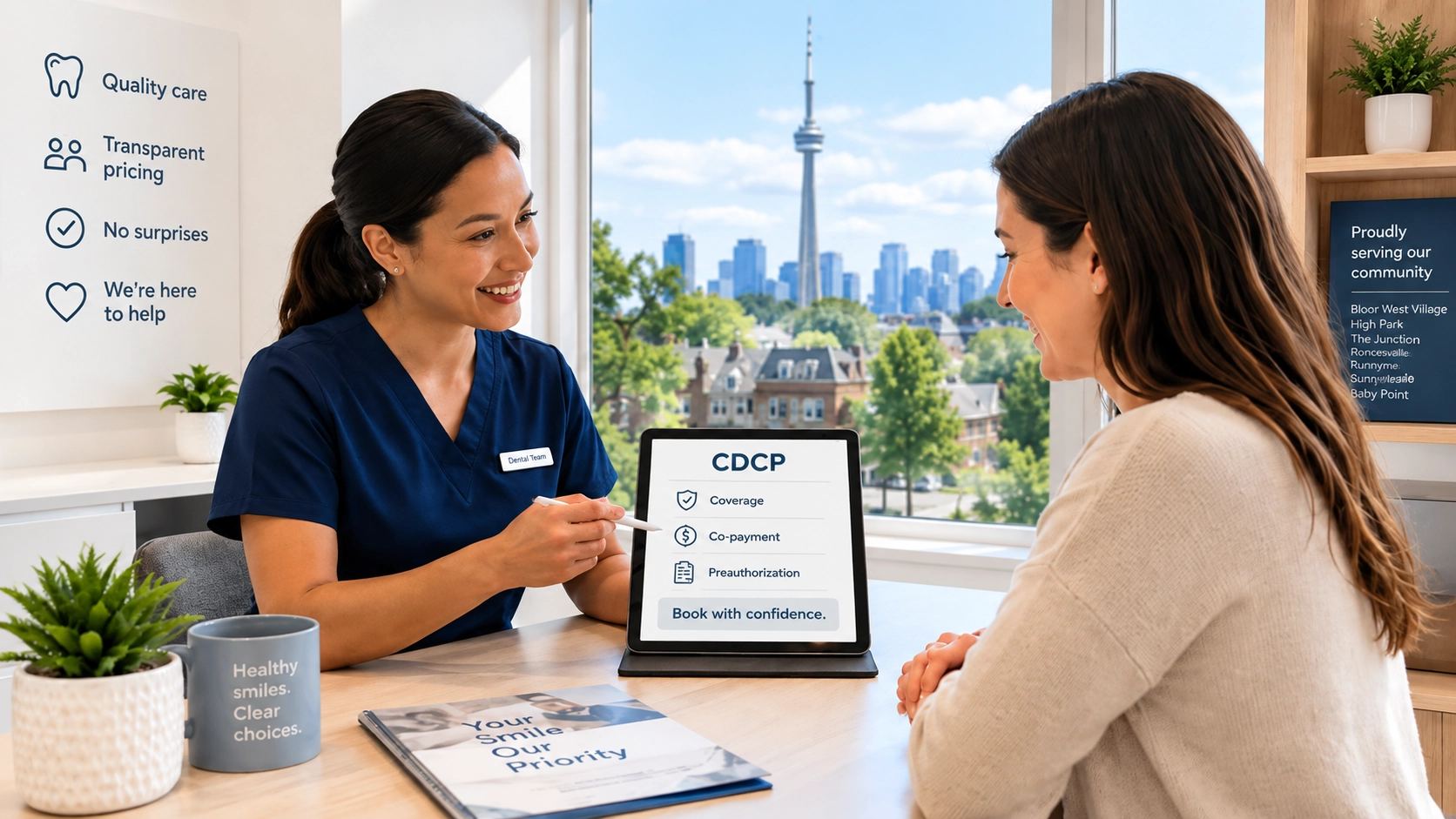
The Canadian Dental Care Plan (CDCP) has helped many eligible Canadians access dental services by reducing financial barriers to receiving care. However, understanding exactly what the plan covers, what it does not cover, and how the payment process works can sometimes be confusing.
In 2026, CDCP coverage continues to depend on eligibility requirements, the type of dental service needed, the provider’s fees, and the coverage level assigned by the plan. Knowing how your benefits work before your appointment can help you make informed decisions about your dental care.
What Is the Canadian Dental Care Plan (CDCP)?
The Canadian Dental Care Plan is a federal dental benefit program designed to help eligible Canadian residents access necessary dental services.
The plan provides coverage for a range of preventive, diagnostic, restorative, and oral health treatments. However, CDCP does not automatically cover every dental procedure or guarantee that all costs will be fully paid.
Patients may still be responsible for certain amounts depending on:
- Their adjusted family net income
- The CDCP coverage level they qualify for
- The dental clinic’s fees compared with CDCP reimbursement rates
- Whether the treatment is considered covered under the plan
Who Is Eligible for CDCP Coverage?
To access CDCP benefits, patients must meet the eligibility requirements set by the Government of Canada.
Generally, eligibility depends on factors such as:
- Not having access to dental insurance through an employer, pension, or another private plan
- Meeting Canadian residency requirements
- Having an adjusted family net income within the program’s eligibility range
- Completing the required application process
Eligibility rules may change over time, so patients should confirm their current status before booking treatment.
What Dental Services Does CDCP Cover?
The CDCP provides coverage for many common dental services when they are considered clinically necessary.
Covered services may include:
Dental Exams and Preventive Care
Preventive dental care helps maintain healthy teeth and gums and detect problems early.
Depending on eligibility and coverage limits, CDCP may help cover services such as:
- Dental examinations
- X-rays when required
- Teeth cleanings
- Fluoride treatments
- Preventive services
Regular dental visits are important because early detection can help prevent more complex dental problems.
Restorative Dental Treatments
The CDCP may provide coverage for certain treatments that restore damaged or decayed teeth.
These services may include:
- Dental fillings
- Repair of damaged teeth
- Some restorative procedures
Your dentist can review your treatment needs and explain whether the recommended procedure is covered under your CDCP benefits.
Tooth Extractions
In certain situations, CDCP may cover tooth extractions when they are considered necessary for your oral health.
Your dentist will evaluate the condition of the tooth and discuss whether extraction or another treatment option is recommended.
Dentures and Prosthodontic Services
Some patients may qualify for coverage related to dentures and certain prosthodontic treatments.
Coverage may depend on specific requirements, limitations, and approval criteria.
If you are considering dentures, your dental provider can explain the available options and what costs may apply.
Emergency Dental Care
Dental emergencies can happen unexpectedly, including severe tooth pain, broken teeth, infections, or injuries.
Depending on the situation and your eligibility, some emergency-related dental services may be covered under CDCP.
It is important to contact a dental clinic as soon as possible when experiencing urgent dental concerns.
What Does CDCP Not Fully Cover?
Although CDCP helps reduce dental costs, it does not necessarily cover the full amount of every treatment.
Patients may need to pay additional fees in situations such as:
- The dental office’s regular fees being higher than CDCP reimbursement amounts
- Treatments exceeding plan limitations
- Services that are not included under CDCP guidelines
- Additional procedures requested for cosmetic reasons
Your dental provider can review estimated costs before treatment begins so you understand your financial responsibility.
Does CDCP Cover Cosmetic Dentistry?
The CDCP is primarily designed to support necessary dental care rather than elective cosmetic procedures.
Treatments focused mainly on improving appearance, such as cosmetic enhancements, may not be covered.
Examples of commonly cosmetic-focused treatments include:
- Teeth whitening
- Cosmetic veneers
- Smile enhancements without a medical need
If you are interested in cosmetic treatment, your dental team can discuss available options separately.
How Does CDCP Payment Work at the Dentist?
Many dental clinics that participate in the CDCP can submit claims directly to the program on behalf of eligible patients.
Before starting treatment, your dental provider can help you understand:
- Whether the clinic accepts CDCP patients
- What portion of treatment may be covered
- Any remaining balance you may need to pay
Coverage details can vary from patient to patient, so confirming your benefits before treatment is recommended.
Can You Use CDCP and Private Insurance Together?
CDCP is intended for individuals who do not have access to private dental insurance.
If your insurance situation changes, you should update your information according to CDCP requirements to ensure your benefits remain accurate.
How to Prepare for a CDCP Dental Appointment
To make your visit easier, consider:
- Confirming your CDCP eligibility before your appointment
- Bringing required identification or plan information
- Asking about coverage before beginning treatment
- Discussing any possible additional costs with your dental provider
Being prepared helps you understand your treatment options and avoid unexpected expenses.
Frequently Asked Questions
Does CDCP cover 100% of dental costs?
Not always. The amount covered depends on your eligibility, income level, CDCP reimbursement rates, and the type of treatment required.
Can I visit any dentist with CDCP?
You need to visit a dental provider who participates in the CDCP program. Always confirm participation before booking your appointment.
Does CDCP cover emergency dental treatments?
Some emergency dental services may be covered depending on eligibility and the specific treatment required.
Are cleanings covered by CDCP?
Preventive services such as cleanings may be covered when they meet CDCP guidelines and limitations.
Do I have to pay anything with CDCP?
Some patients may have no out-of-pocket costs, while others may need to pay a portion depending on their coverage details and the dental clinic’s fees.
Get Help Understanding Your CDCP Coverage
Understanding your CDCP benefits before your dental appointment can make the process easier and help you plan your care with confidence.
If you are eligible for the Canadian Dental Care Plan, a participating dental clinic can help you understand your coverage, explain available treatments, and guide you through the next steps toward maintaining your oral health.